AboutAdvisorySpeakingRijālWritings

Suhba Consulting

Building Leaders.
Strengthening Institutions.

Suhba Consulting provides strategic advisory, leadership formation, and facilitation for Muslim communities and organizations — grounded in Islamic scholarship and practical theology.

What Is Suhba?

The Foundation of Everything We Do

Suhba (صُحْبَةٌ) means Companionship in Arabic — the word used to describe the transformative bond between the Companions and the Prophet Muhammad (peace and blessings be upon him). It is not merely being near someone; it is walking alongside them with sincerity, trust, and shared purpose.

Whether strengthening an institution, forming the next generation of Muslim men, or equipping communities with clarity and direction — the work begins with companionship that is honest, grounded, and rooted in sacred wisdom.

What We Do

Building Leaders. Strengthening Institutions.

Three ways we serve the communities and leaders shaping the Ummah

Advisory

Community and Organizational Advisory

Strategic guidance for mosques, Islamic centers, and Muslim organizations navigating growth, conflict, leadership transitions, or the desire to build something more intentional.

Explore Advisory

Formation

Rijāl: Men's Formation Community

A 12-week cohort-based journey of personal and spiritual maturation for Muslim men ages 18 to 40. Rooted in the tradition and the courage to be honest with yourself and your brothers.

Learn About Rijāl

Speaking

Speaking and Facilitation

Keynote addresses, workshops, retreats, and facilitated community conversations on spiritual formation, Muslim manhood, institutional health, and engaging the next generation.

Book a Speaker
10+
Years of Pastoral Service
2
Graduate Degrees
8+
Community Partners

Trusted by communities across the region

MASDC
ADAMSCenter
OASISInitiative
RIBAT
TANWIRInstitute
MWFMuslim Wellness
PropheticLiving
QAHWACafe

About

The Meaning Behind the Name

Suhba (صُحْبَةٌ) is an Arabic word that translates to Companionship. In the biographical tradition of Islam, the phrase لَهُ صُحْبَةٌ — "He had companionship" — refers to someone who was a Companion of the Prophet Muhammad (peace and blessings be upon him). It describes not a casual acquaintance, but a relationship marked by presence, trust, sincerity, and shared growth. (Lane's Lexicon, 1653)

After nearly a decade of pastorally serving individuals, families, and institutions — Muslims and non-Muslims alike — and under the instruction of his teachers, Imam Abdul-Malik Merchant established Suhba Consulting to formalize his service to communities and their leaders.

Suhba Consulting exists to strengthen the institutions and leaders who carry the weight of serving others — with the same companionship, honesty, and sacred intention that the word Suhba has always embodied.

Our Approach

صُحْبَة
Suhba (Companionship)

You are not a case to be managed or a contract to be fulfilled. You are a community to be accompanied.

حِكْمَة
Hikmah (Wisdom)

Guidance drawn from the deep wells of Islamic tradition, the Prophetic example, institutional experience, and real-world understanding.

تَرْبِيَة
Tarbiyah (Formation)

Sustainable transformation happens through structured, intentional processes — not one-off events. We build with you over time.

Imam Abdul-Malik Merchant

Consultant · Educator · Community Advisor
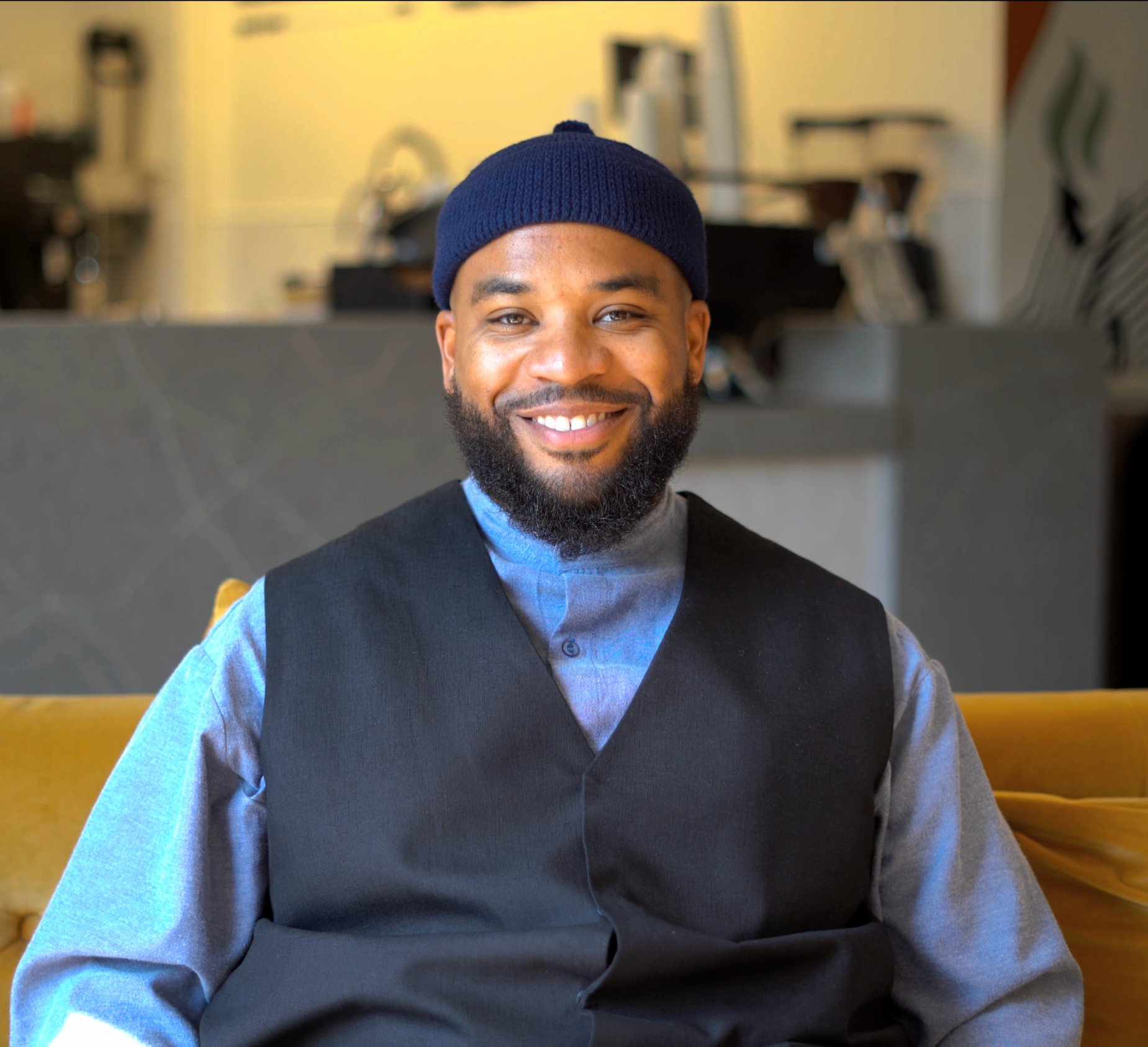
Imam Abdul-Malik Merchant

Imam Abdul-Malik Merchant is a consultant, educator, and community advisor specializing in institutional development, spiritual formation, and strategic guidance within Muslim communities.

He completed his undergraduate studies in Islamic Studies — with a specialization in Islamic culture — at Umm al-Qura University in Makkah, Saudi Arabia, where he studied and lived abroad for nearly ten years. Upon returning to the United States in 2016, Imam Merchant assumed a leadership position at New England's largest mosque, focusing on spiritual care and community guidance. He subsequently served as the Muslim Chaplain at Tufts University and the Essex County Sheriff's Department.

In 2020, he completed a Master of Theological Studies at Boston University's School of Theology, with a concentration in practical theology.

He currently serves as the Program Director for a nationwide Imam Fellowship at Hearts Together Foundation, the Resident Scholar at McLean Islamic Center, and a board member of the Muslim Wellness Foundation. He is also the creator of the Rijāl Men's Formation Community.


Advisory

Strengthening the Communities
That Serve the Ummah

Strategic guidance for mosques, Islamic centers, Muslim nonprofits, and community organizations navigating growth, challenge, or transition.

Healthy communities are built by healthy leaders and healthy systems. Yet many of our mosques, centers, and organizations are navigating complex challenges — leadership transitions, community conflict, programming that no longer serves, burnout among staff and volunteers, or simply the question of how to grow intentionally rather than reactively.

With experience spanning mosque leadership, university chaplaincy, correctional ministry, nationwide fellowship development, and board governance, Imam Abdul-Malik brings both scholarly grounding and institutional understanding to every advisory engagement. This is not generic consulting. It is companionship for the people who carry the weight of serving others.

Areas of Advisory

Tailored to the specific needs of your organization

Organizational Health Assessment

An honest evaluation of your community's internal culture, communication patterns, leadership dynamics, and areas of strength and strain.

Programming Development

Building meaningful, sustainable programs that serve your community's actual needs — youth engagement, men's or women's programming, new Muslim support, family services, or spiritual development.

Leadership Consultation

For board members, imams, directors, and community leaders navigating difficult decisions, interpersonal tensions, or the loneliness of leadership.

Conflict Mediation

When community conflict has become entrenched, an outside mediator can help restore communication and trust. Guided by Islamic principles of justice (Adl), mercy (Rahmah), and reconciliation (Islah).

Spiritual Health Evaluation

Beyond programs and budgets, how is the spiritual health of your community? Are people growing closer to Allah through your institution, or simply passing through?

The Process

What does working together look like?

1

Discovery Conversation

A complimentary initial conversation to understand your organization, its context, and your needs.

2

Proposal and Scope

A tailored engagement proposal — with clear scope, timeline, and investment.

3

Advisory Engagement

The work itself — whether a single intensive session, a series of consultations, or an ongoing advisory relationship.

4

Reflection and Next Steps

A closing reflection on what was accomplished, what remains, and recommended next steps.

Start a Conversation

If your organization is navigating a challenge or seeking to grow with intention, I would be honored to explore how we might work together.

Speaking

Speaking and Facilitation

Keynote addresses, workshops, retreats, and facilitated community conversations — rooted in Islamic scholarship, enriched by pastoral experience, and delivered with warmth and honesty.

Topics

Areas of focus for keynotes, workshops, and retreats

Spiritual Formation and Personal Growth

How the Islamic tradition provides a framework for becoming the person Allah created you to be. Drawing on Tarbiyah (formation), Tazkiyah (purification), and the Prophetic model.

Muslim Manhood and Masculinity

A frank, tradition-rooted conversation about identity, emotional honesty, responsibility, and the courage to grow. Based on the Rijāl program.

Marriage, Family, and Relational Health

Premarital readiness, marital communication, and the Islamic framework for building healthy families.

Pastoral Care and Community Health

For Islamic centers, chaplains, and community leaders. Building systems of care, recognizing need, and developing cultures of trust.

Engaging Young Muslim Adults

How communities can meaningfully engage young Muslim adults' religiosity by connecting beliefs and practices across their development.

Format Options

Keynote Address
Workshop
Friday Sermon (Khutbah)
Weekend Retreat
Panel Discussion
Facilitated Conversation

Virtual and in-person formats available.

Book Imam Abdul-Malik

For speaking engagements, workshops, or facilitated conversations, please submit a request.

Rijāl — Men's Formation Community

Becoming the Man You Were Created to Be

Muslim Men · Ages 18–40 · A 12-week cohort-based journey of personal and spiritual maturation — rooted in the tradition and the courage to be honest with yourself and your brothers.

What Is Rijāl (Men)?

Not a class. Not a lecture. A journey.

Rijāl combines Islamic teaching with guided self-reflection, peer accountability, and practical application. The goal is not information but transformation — men who are more self-aware, more spiritually grounded, more emotionally present, and more capable of carrying the responsibilities Allah has placed before them.

12
Weeks

A deliberate arc from foundation to depth to integration.

20–25
Brothers

A cohort who walks through the entire program together.

90
Minutes

Teaching, guided reflection, and small group conversation.

Who Is This For?

This program is for the man who is ready to stop drifting and start building.

You are a Muslim man between 18 and 40 years old.

You sense there is more to manhood than what the culture has offered you.

You are willing to be honest — with yourself and with a small group of brothers.

You want to grow spiritually, emotionally, and relationally — not just intellectually.

You are ready to commit to 12 weeks of showing up, reflecting, and doing the work.

The Program Arc

Foundation

Weeks 1–4

Building trust, establishing identity, confronting the inner life, and developing discipline. The ground is prepared.

Depth

Weeks 5–10

Loneliness, purity, emotional honesty, worth, readiness, and father-wounds. This is where walls come down.

Integration

Weeks 11–12

Turning transformation into trajectory. Purpose, legacy, and the ritual of completion.

$375

Around $30 a session. A 3-installment payment plan is available.

If cost is a concern, let us know. We will reach out personally to find a way forward together, InshaAllah.

Rijāl — Men's Formation Community

The 12 Weeks

Becoming the Man You Were Created to Be

Each cohort of 20–25 men walks through topics that matter — identity, discipline, loneliness, purity, emotional honesty, marriage, father-wounds, and purpose — in a space that is safe, structured, and rooted in the Prophetic example.

Week 1

The Covenant

This session establishes the container. Participants meet one another, hear the vision for the program, and affirm the covenant together. The teaching introduces the Prophet Muhammad ﷺ as the model of rujūlah — manhood — not as a distant historical figure but as a living example of what it means to grow into the man Allah created you to be.

Trust-BuildingCovenantProphetic ModelIntention
Week 2

Who Am I Without the Labels?

Before a man can grow, he has to know who he actually is — underneath the career, the cultural expectations, the family projections. This session explores identity in Islam through the lens of fiṭrah (the innate nature) and the foundational reality of being ʿabd Allāh — a servant of God — before anything else.

IdentityFiṭrahSelf-AwarenessʿUbūdiyyah
Week 3

The War Inside

Every man has an inner battlefield. This session names it: jihād al-nafs — the struggle against the lower self. Not in abstract theological terms, but in the daily realities of avoidance, distraction, procrastination, and the patterns we use to escape discomfort.

Jihād al-NafsSelf-HonestyAvoidance PatternsInner Struggle
Week 4

Discipline Is Freedom

Istiqāmah — steadfastness, consistency — is one of the most underappreciated virtues in the Islamic tradition. This session reframes discipline not as restriction but as liberation, exploring the Prophet's ﷺ daily rhythms and the relationship between small, repeated acts and lasting transformation.

IstiqāmahConsistencyProphetic HabitsStructure
Week 5

Loneliness and Brotherhood

There is an epidemic of male loneliness that nobody in the Muslim community is naming directly. Men have contacts but not confidants. This session confronts the crisis head-on, exploring the Prophetic model of deep friendship through the relationship between the Prophet ﷺ and Abū Bakr al-Ṣiddīq.

BrotherhoodMale LonelinessProphetic FriendshipVulnerability
Week 6

Purity in a Saturated World

One of the most necessary and most avoided conversations in Muslim spaces. The session addresses the realities of living in a hypersexualized, algorithmically curated environment — without shame and without naivety. Rooted in the Qurʾānic command to guard the gaze and the Islamic understanding of the heart as a vessel that must be actively protected.

TaqwāGuarding the SensesDigital AgePractical Strategies
Week 7

Anger, Sadness, and the Stuff We Don't Say

Somewhere along the way, Muslim men received the message that strength means emotional numbness. This session dismantles that myth using the Prophet ﷺ himself as evidence. He wept at the death of his son Ibrāhīm. He expressed anger at injustice. He showed open affection to his grandchildren. Emotional literacy is not weakness — it is Sunnah.

Emotional LiteracyProphetic EmotionMasculinityPermission to Feel
Week 8

Work, Money, and Worth

In a culture that measures men by their income, title, and output, it is easy to collapse identity into productivity. This session untangles self-worth from career success by grounding participants in the Islamic concepts of rizq (divinely apportioned provision) and tawakkul (reliance on Allah).

RizqTawakkulAmbitionSelf-Worth
Week 9

Women, Marriage, and Readiness

The conversation about marriage in Muslim communities often reduces to checklists. This session goes deeper. What does readiness actually look like — emotionally, spiritually, relationally? Participants are challenged to examine whether they are building themselves into the kind of man a righteous woman deserves.

MarriageSelf-AssessmentProphetic MarriageEmotional Maturity
Week 10

My Father, My Wounds

Often the most emotionally charged session. Every man has a relationship with his father — present or absent, loving or distant — that shapes how he sees himself, God, and other men. The aim is not to blame but to understand, to grieve what was missing, and to consciously choose what to carry forward and what to leave behind.

Father-WoundsIntergenerational PatternsForgivenessBreaking Cycles
Week 11

Purpose and Legacy

After ten weeks of excavation — identity, struggle, emotion, wounds — this session turns the gaze forward. The teaching explores the concept of khilāfah: the human being as a steward and representative of God on earth. What are your particular gifts? What breaks your heart? Where do those two things meet?

KhilāfahCallingGiftsDirection
Week 12

Sending Forth

The final session is a ritual of completion, not a graduation. Small groups share what has shifted over the 12 weeks — not in polished speeches but in honest testimony. Participants are invited to name what they are taking with them and to commit to what comes next.

CompletionTestimonySteadfastnessWhat's Next

Ready to Begin?

If something in these pages stirred something in you, trust that.

Back to Rijāl Overview

Rijāl — Men's Formation Community

Join the Waitlist

You are taking a meaningful step. This form places you on the waitlist for the next Rijāl cohort. Spaces are limited to preserve the depth and trust this work requires.

Back to Overview

After you submit this form, you will receive a confirmation. When registration opens for the next cohort, we will reach out to you personally. Waitlist members are contacted in the order they joined.

Rijāl

This page was prepared for you. Choose the amount that works for your situation and proceed to payment.

← Back to Overview
Secure Your Spot

Rijāl is a 12-week spiritual formation experience for Muslim men. The experience is exactly the same for every brother in the cohort, regardless of what is paid. Choose the amount that reflects your current situation.

Your Investment
$188
$188$375
One payment of $188

All payments are processed securely through Stripe. Credit cards, debit cards, Apple Pay, and Google Pay are accepted.

Questions? Contact us here.

Rijāl · A Program by Suhba Consulting
Rijāl

Your spot is waiting. Complete your registration below by selecting a payment plan. Payment is required to secure your place in the cohort.

← Back to Overview
Secure Your Spot

Rijāl is a 12-week spiritual formation experience for Muslim men. Spaces are limited to preserve the depth and trust this work requires.

$375
Program Investment
Choose Your Payment Plan
Pay in Full
One payment of $375
3 Installments
3 monthly payments of $125

All payments are processed securely through Stripe. Credit cards, debit cards, Apple Pay, and Google Pay are accepted.

Questions? Contact us here.

Rijāl · A Program by Suhba Consulting

Writings

Reflections and Publications

Reflections

Khawatir (خواطر) — reflections on faith, life, and the inner journey. Published on Substack.

Latest from the Blog

Visit Khawatir on Substack to read the latest reflections.

khawatir.substack.com

Read on Substack

Publications

Academic work bridging Islamic scholarship and practical theology.

Work With Us

Every engagement begins with a conversation. Tell us about your organization, your event, or your community.

How Can We Help?

Select what best describes your inquiry

Organizational Advisory

Strategic guidance for your mosque, center, or organization

Speaking or Facilitation

Keynote, workshop, retreat, or community conversation

General Inquiry

Something else? I would be honored to hear from you.

I aim to respond within 2 to 3 business days.

Community Resource

Premarital Preparation Guide

A gift to the community. Practical tools and guided reflection for couples preparing for marriage.

Premarital preparation has become popular, and rightly so. Unfortunately, because of its popularity, it sometimes becomes a mere formality. To avert this disappointment and give you tools for success, I suggest going through the following resources and taking notes about what challenges or questions come up for you both.

Your Preparation Journey

Work through these together as a couple

1

Know Yourself: Personality Assessment

The first step to establishing a healthy marriage is knowing more about yourself.

Take the Free Personality Test (Truity)
2

Understand Your Love Language

Understanding how you like and need to be loved is vital information for yourself and your potential spouse.

Take the Free Love Languages Test
3

Imam Majid's 100 Questions

After more than 25 years of serving the Muslim community, Imam Muhammad Majid of ADAMS Center prepared this exhaustive list of questions.

Download the 100 Questions
4

Identify Your Support System

Reflect on: Who are the mentors I trust to discuss my marriage with? What system of self-care and soul-care do I have?

5

The Nonnegotiable Assessment

This final assessment helps you identify and articulate your true nonnegotiables.

Take the Nonnegotiable Assessment

Back to Suhba Consulting

Let's connect.

Whether you are exploring a partnership, have a question, or simply want to say hello — I would be honored to hear from you.

I aim to respond within 2 to 3 business days.